March Update

For March…

*drum roll*

I MET MY WRITING GOAL, which was to write at least 12 days out of this month.

The total stats are–
Days with writing in them: 13
Total number of Words: 7,762
Total amount of Time: 9 hours and 58 minutes.
Year to date word total: 17,921

Closer. CLoser. CLOser. CLOSer. CLOSEr. CLOSER!

Yep, Writing Peeps! This book is getting DONE! Whaaaaaat!

The “Write” Mind

I didn’t believe it.

I read a thousand articles and blogs by all these experienced writers saying that writing doesn’t have to be done in a certain place, at a certain time. I was skeptical because I had worked up an ideal writing situation. One that would involve me, sitting at a proper desk with a view of a willow tree blowing in the breeze, sipping a cup of fancy tea with a hand-woven afghan covering my shoulders, admiring the lines of sunshine crossing over my research and biscotti crumbs, my glasses resting on the peak of my nose while I tuck flyaway wisps of hair behind my ears from my handsomely messy chignon.

Those authors with published novels and book events, they didn’t know how I needed to write. I was so snotty, embarrassingly so, especially for not even owning a hand-woven afghan.

Here’s the thing about the dream scenario v. real-life writing. In the dream, did you notice ANY writing happening? No? Me, neither.

I’m a romantic at heart, and it is totally like me to romanticize the job. As a disclaimer, I’m not knocking dreams. Believe me. If it weren’t for them, I wouldn’t want to be a Writer. But I’ve learned a lesson as I’ve set writing goals and forced words out while waiting for a doctor’s appointment or ravaging fifteen minutes of my lunch break. The lesson: Novels don’t magically appear from your mind into querying form just because you position yourself exactly as you are in your dream.

Do you feel like you just learned the Tooth Fairy doesn’t exist? Me, too.

I don’t know why I couldn’t have learned this lesson from the above-mentioned thousands of articles that have basically said the exact. Same. Thing. Other than the fact that I have always been hard-headed. As it is, I’m learning it now. Maybe you’re not as stubborn as me and I can save you some pain from disillusionment. I’m writing this for those pliable minds.

The truth?

Maybe, in the future, there will be some days that look like “the dream”, which is why I am planting a willow tree this fall, but for the most part, life gets messy and unpredictable, and writing can happen EVERYWHERE.

It’s freeing. Suddenly, I’m not tied to a squeaky desk chair.

Don’t believe me?

I’ll give you an example. A computer breakdown thwarts my one hour grocery store trip, and there is only one cashier who can’t move to another register. (I live in a small town.) When I lived in the dream, I would be angry at the world for wasting my time and come home flustered, splatting negativity all over Husband until he was in a bad mood, too. Now, I have my book loosely plotted by scenes and I work one scene at a time, so if I get stuck in this type of situation, I pull out my phone app or the notebook-pen combo and just…start writing. It takes a few moments to think of what I’d last written, but that’s all. It helps, too, that I’m a more consistent writer, so I don’t have to struggle to remember what I was working on or how the scene is supposed to “feel”. When the computer magically starts working again and check-out resumes, I’m not mad. I can genuinely smile at the nervous employee, who expects to be yelled at by those in line, and return home with groceries and a happy heart because I’ve got more words to add to my draft.

See? All because I let go of the dream and got into my “write” mind. Bahaha! Cheesy, I know.

To further the cheese, here are clichés I begrudgingly use in this post because they are true:

1. Practice makes perfect- The more I switch mindsets from Mea-the-Mommy/Wife/Daughter/Full-TimeEmployee to Mea-the-Writer the less time it takes and the easier it gets.

2. Don’t sweat the small stuff- In a perfect world, every word I write expresses exactly what I want, preciously detailed, and elicits the feelings I want the reader to feel with no revision necessary. This beautiful, broken world, my Friends. If I get ten minutes, I can’t worry if that was the exact word I needed or if MC wore a green or purple cat sweater in the last scene. I write my best and give myself something to revise later. You can’t edit Nothing.

3. If at first you don’t succeed, try, try again.- I’m still learning the best way to keep my wits about me, to let go of the romantic image of Mea-the-Writer, and to revel in the slow but steady pace in which I’m able to carve out writing time. Early in this revelation, there were lots and LOTS of times when all I could do was stare at the paper/phone app, reread the same sentence over and over, and declare myself too verklempt to produce anything new. I had to figure out how to Get Over Myself and write what popped into my head. Though the words were not always usable then, I can now keep a significant number of words from the original impromptu writing jaunt. I’m so thankful that something (and sometimes someone *Shout out to CP!*) pushed me forward when I needed it.

I see this transformation, and I’m amazed at how this whole writing adventure bleeds into other aspects of my life–organization, attitude, relationships…

Just finding something you love and going after it full-force…

I have never been so driven. I have never been so happy.

I can’t wait to see what will happen next. I’m my own experiment!

February Update

I’ve told you guys how much I like my planner, but did I tell you that I’m setting monthly check-points to see if that helps get things done? I didn’t?! Well, I didn’t know if it would work yet, since I had on January for a base and February to experiment with, but I’m loving the preliminary results!
I don’t know how many words I truly wrote in January because I started documenting that on the 21st.
But from the 21st-31st, there are 1,577 new words to LibertyBook (formally known as FirstBook).
For February, there are 6,887 new words, and 11 days that had writing within them, even if it was for 5 minutes.
I’m surprised, you see, how motivating documentation can be, and excitement tickles the base of my spine until I can’t sit still.
Let’s celebrate together on accomplishments, my Writing Pals! Accomplishments come in all sizes. Maybe you finally figured out how MC got from Point C to Point D, or you outlined a new scene, or you wrote your novel in a day, or whatever. (I might claim you are the devil if you wrote a novel in a day. No hard feelings. Just an observation.) Accomplishment is accomplishment, people, no matter the packaging. And that’s what I love about all this! That’s worth celebrating, don’t you think?

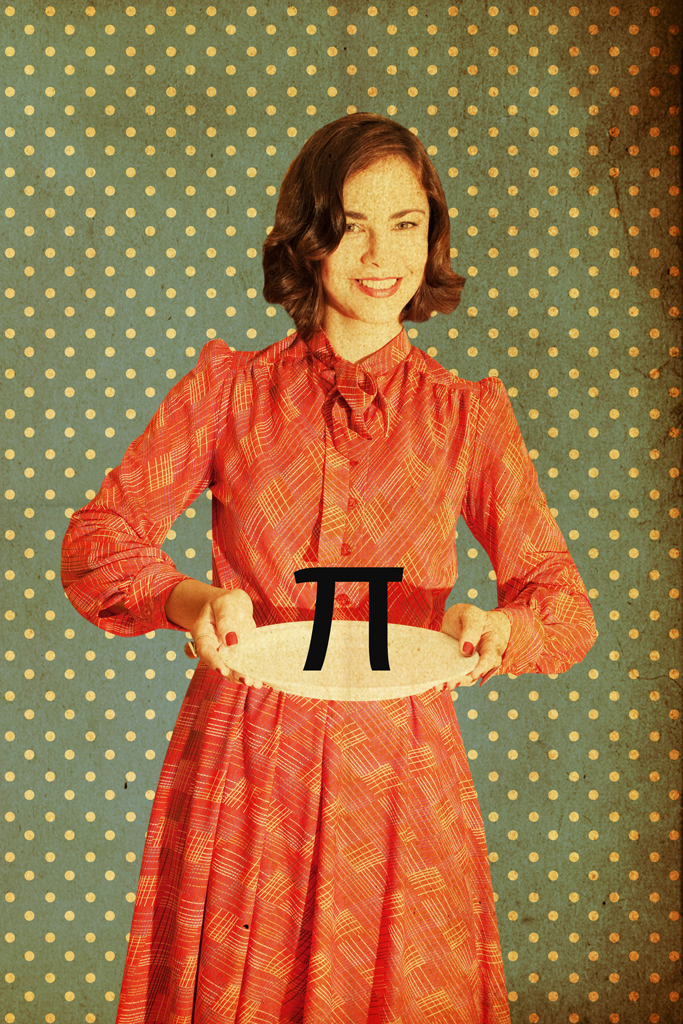
So here’s some Pi…
Pi
…for getting through another month,fighting for your dream. Here’s to getting closer to your Goal! Here’s to feeling damn good about yourself for persevering through all the things you HAVE to do to get to the few minutes you get to do something you LOVE! Hip, hip, ha-friggin-ray!!

To Planner or Not to Planner?

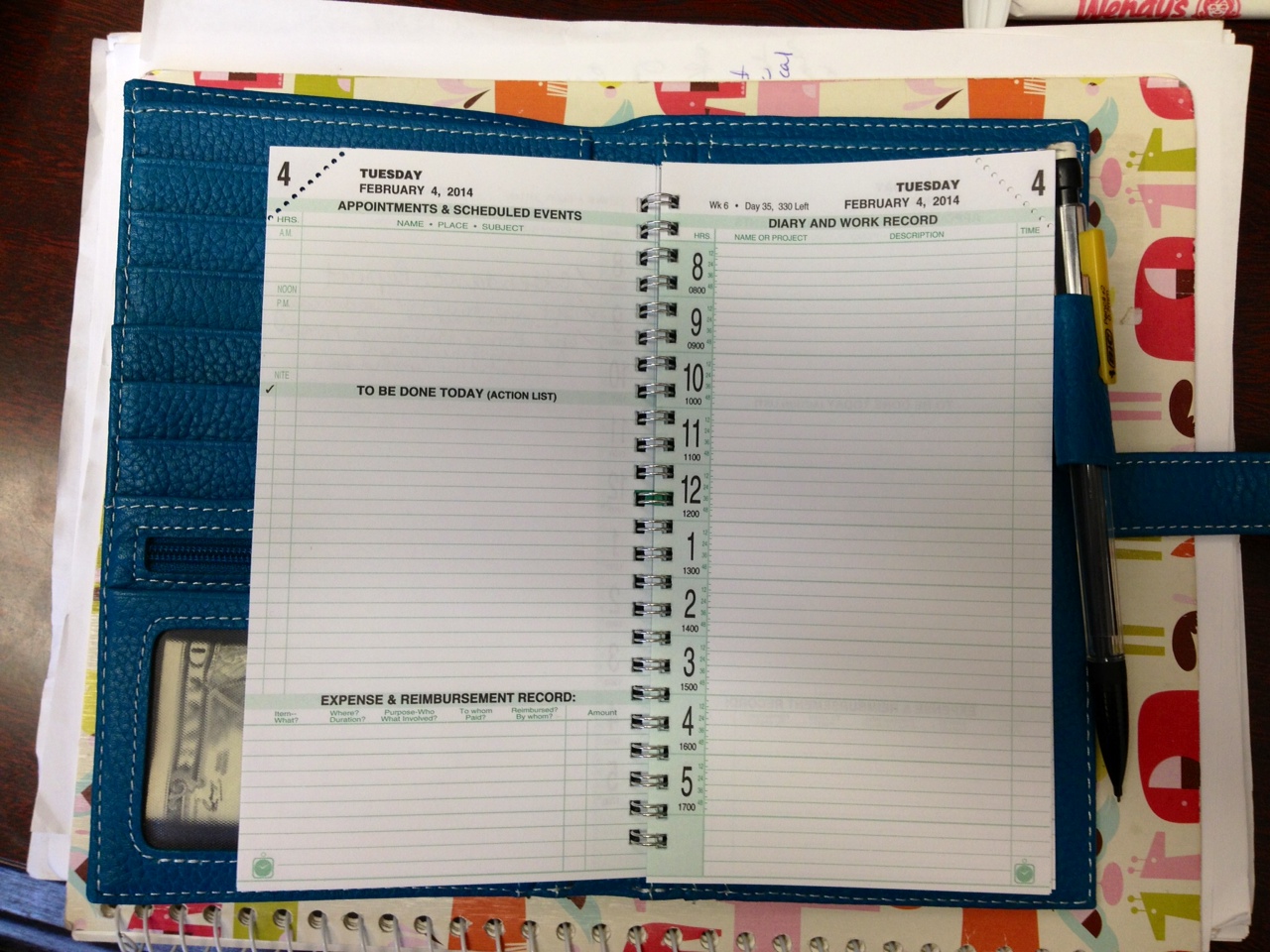
I have a PLANNER, and I am USING it! Yes, dear friends, I have vowed to be more organized this year, and with all the irons in my metaphorical fire (mom, wife, job, writing, other family, maid, etc.), this has made all the difference. Something else, too… I’m not just putting Things To Do on this list, but also unplanned things I’ve accomplished. So, for example, if I spontaneously make a pair of earrings, I make a note of it.
Oh! And something else… I’m keeping track of my writing time in this amazing contraption! (AND my bank account!) So, when I feel like I’m a stagnating pool of Good for Nothing only capable of harboring mosquito eggs (I kind of grossed myself out a little with that one.), I look back at my planner and realize that I, somehow, carved 50 minutes out of last week last to write 481 words. That is 481 words closer to the end of my first draft, which should fill me with joy. But if that doesn’t help the BLARG feeling, I look at the days I marked Mommy/Son time and remember his sweet hugs and the way he looks into my eyes when he laughs.
Husband has sung the praises of his planner for two years-ish now, and I have finally, FINALLY, acknowledged his song. (I’m stubborn, and I’m working on it.) Now we are a duet, and I am here to tell you I get more done with a planner in my hand than I did without it.
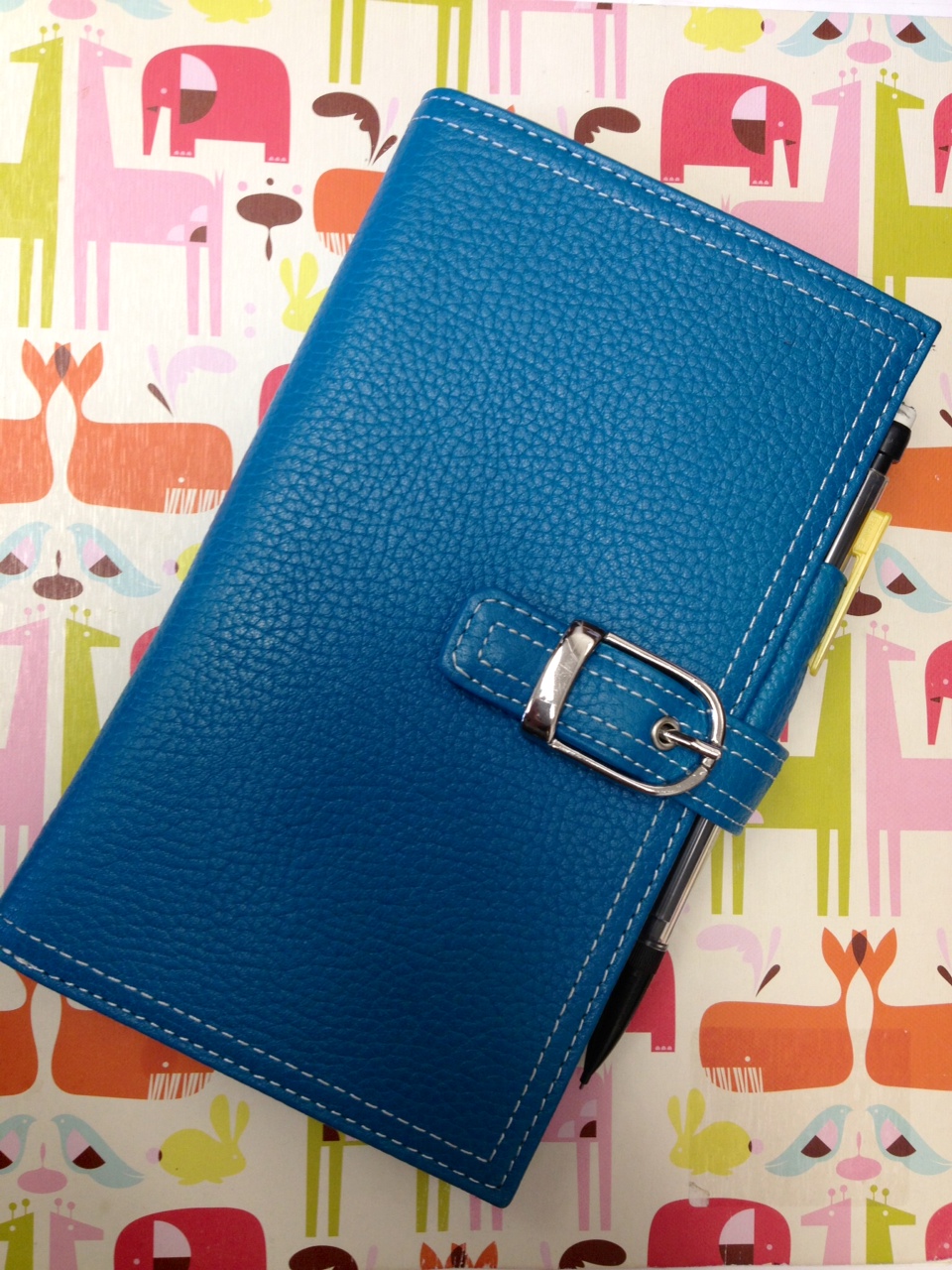
I have a Two Page a Day planner so I can have my work list on the right, my personal list on the left, my bank stuff on the bottom left, and personal appointments or important notes on the top left.
planner 2
Also, it’s pretty, and studies show I am 50% more likely to incorporate pretty things into my life. (The other 50% is reserved for broken things because I love them.) (Wait…I don’t think that math makes sense…)
planner 1
So, if you are on the fence, Planner or Not to Planner, tip the scale to Planner, try it for a month, and if you don’t like it, you’re doing it wrong. Ha!
Later!

Nostalgia, You Foul Thing

Wow, but I have just been smacked in the face. I was listening to an interview with Carrie Mesrobian, author of Sex and Violence where she spoke, among other informative topics, about nostalgia in young adult authors. Specifically, how there is a tendency to put our characters in trying situations and have them react in a way that we, as learned, experienced adults, hope they would, rather than have them react as an unexperienced, naïve, or impulsive teen would. Now, if it’s in my character’s nature to act beyond his/her years, then so be it. But not every character will be motivated to make well-thought-out decisions about EVERYTHING in his/her life, especially when they are at emotional odds. Also, not every character who does make an impulsively poor decision is a Bad Guy.
As someone who had a conservative teen experience, I look back on why I made the reserved choices from the decisions I was allowed to make, and doing so, I discover that I didn’t make “right” choices because I weighed the Pros and Cons of the situation and resolved that the result was moral and just in society’s view while it upheld my personal resolution to remain pure and unmarred by the wicked, wicked world. No. I made the “right” choice because I was fearful of the consequences presented by my parents if I weren’t to choose what they brought me up to choose, and if I were honest with myself, I was fearful to experience things outside of my comfort zone because I knew NOTHING of the outside world other than what my parents and my church told me. I don’t want to discuss religion and children, but I do want to discuss my teen cowardice and the way it is affecting my current writing.
I could have removed the veil of fear and judgment from my head and observed the “outside world” for myself, spoke to others on the border of my comfort zone, listened to their needs, desires, likes, dislikes and maybe I would have seen that I had nothing to judge or fear because my longings and their longings were the same. We could have been friends. But what if I didn’t come to that conclusion? At the very least, it would have been my conclusion and not other’s opinions that I took to my heart as fact. And that was my fault. No one else’s.
I know this now as an adult, and I purposefully keep my mind and heart and eyes open, but my teen main characters are as scared as I was to make impulsive, experimental decisions. I brought those same emotions from Way Back When to my writing and unknowingly grasp at them for character development—which totally sucks. Why does it suck, you ask? Currently, both my male and female Mains would rather talk menstrual cycles and ball sacs than discuss anything about their possible relationship or emotional fortitude. That’s why.
So, thanks to this interview, I am aware of my problem. I don’t want to dwell on the idea that after years of reprogramming, that mindset is still hiding inside me. I don’t want to brood in the gloom of What Was with arms crossed, sullen expression, and furrowed brow… as I am mentally at this exact moment. I want to step back; realize, once again, the past is the past; analyze it for what it is; and finally, use it to present life changes in characters to tell a good story.
Why was I fearful? What did I miss while I hid? What other emotions mixed with the fear (shame, guilt, regret?)? Would stepping out from under the shelter of complacency change anything, or would I have ended up the same as I am now, only with different experiences to get me to this exact point? What are the extremes? Answer—timorous reserve and dauntless openness. And somewhere in-between….. Well, hello, there, Beginning of a Character Arc. It’s nice to meet you.

Feeling All Kinds of YAY!

On September 19, 2013, I sent off the first draft of FirstNovel Part I to CP. I am feeling all kinds of YAY right now. I was a week behind the deadline I set, but in the grand scheme of things, that didn’t really matter. Why? Because it was my deadline with no other motivations propping it up and because, well, I didn’t pummel myself for missing the deadline and give up. I trekked on and finished it. Which is something new for me. I’m liking this perseverance characteristic I’ve acquired. I’m liking that it’s there because I’ve placed more value on Me. (Yes, I used a capital M. I’m that awesome.)
Part II outlining is already commencing, and I look forward to working my ass off. Who says that? People who love what they do, that’s who. And, currently, that’s me!!!!

It’s Banned Books Week, and in honor of banned books everywhere, here is a video for your enjoyment.

I hope you are getting closer to your writing/life goals! Feel free to share! I love celebrating, and I can e-celebrate with You! (Yes, I used a capital Y. You’re that awesome!)

Aanndd…I’m off!

Ramblings

I entered a contest where I had to condense the plot of my story into 250 words or less.  I thought Oh, this won’t take very long.  Three days later I am finally happy with the summary, and I even had to call in my CP to help straighten out some kinks.  I’m a bit embarrassed about that.  There are so many interesting (or at least I think) plot points that I would love to include, but at the end of the day, what is important?  Writing the summary helped me understand that the interesting goings on in the story make it unique and fun, but the plot and characters drive it from point A to point Z.  I think I will write a 250 summary for all my future stories and keep it in front of me, so when I get off track, I’ll be reminded of where the story and characters are headed.

Just a thought…

Have a groovy day!

Critiquing a First Draft

In a previous post , I mentioned that I was trying to get my first 10,000 words to my critique partner.  I ended up overwhelming her with 22,800ish words. (Remember that I have written on this for two years, so this is not really as impressive as it sounds.)  As my CP nor I have ever critiqued a first draft to a novel (Writing prompts and short stories, yes.  Novel, no.), we were trying to verbalize what results we were looking for.  We knew we didn’t want a line by line, grammatical critique.  We knew we wanted to have well-rounded characters, to have an interesting first sentence/page, and to find pace problems and plot holes.  We knew we wanted to feel captivated; we realized that honesty was better than sugar-coating things wouldn’t help in the end.

It was hard, nay, almost impossible.  So I started a list and looked to the internet for help.  Because it took me a while to combine what we wanted and to sift through Internet for help, I’m hoping this post will help out Future First-Time First Draft Writer/Critiquer.  That you can use the time it took to do this, you know, actually critiquing or writing your draft.  So here’s my list, links included:

Critique Notes

1. At what point did you put it down? If your reader went from beginning to end without halting, that’s an indicator that your first thirty pages are doing their job of introducing the situation, characters, and stakes while holding the reader’s attention. On the other hand, if your friend says that at page eight she took a break to have a root canal—well, that speaks for itself.

2. What characters did you feel the most strongly about? If your reader hates your protagonist’s opponent (a.k.a. your villain), consider reexamining that character to give her some qualities that make her at least a little sympathetic and therefore more complex. If, however, your reader doesn’t remember your protagonist’s name, closely evaluate how you can make your protagonist more intense and even larger than larger than life.

3. What parts did you skip? The answer to this question can be a real eye-opener. Although the answer will surely differ from reader to reader, what a reader decides not to read is important. By skipping a passage, your reader is telling you that that section of text didn’t establish an emotional connection. Check these skipped passages closely—they’re prime targets for rewriting or elimination.

(http://www.writersdigest.com/tip-of-the-day/the-top-3-critique-questions-you-should-ask-a-reviewer)

 
4. Explain not only where your book can be improved, but give a few examples of how to improve it.  It should not rewrite the novel for you, but it should give you a guide so you can go back and do the dirty work.

 (http://www.how-to-write-a-novel.net/manuscript-critique.html)


Example 1: (Bolded text is the story.  Regular text is the Critiquer)

SOCIETY OF NIGHT AND LIES

URBAN FANTASY

Critiquer: Rebecca Weston

It was a quiet night at the Other Side Bar and Grill. The usual patrons were coming and going about their business, some playing pool while others drank their miseries away. Outside, it was raining, unusual for the time of year, but it was welcomed. (I don’t feel like these opening sentences are doing much for you, to be honest. They’re too generic to be really hook-worthy.) The black pantheress sat in a booth across the room, while sipping at a drink she really didn’t want, and idly watching a pool game she wasn’t really interested in. (This is a better sentence to open with. Talking about a black pantheress sitting in a bar is more attention-grabbing as it immediately makes us go, “Wait…a what now?”) As she watched, a stranger entered the bar, tall, lean, and wearing a cloak from out of some medieval game. (“Some medieval game” isn’t sitting right with me. It feels awkward – like you don’t want to all-out describe the cloak but you don’t want to name-drop Dungeons & Dragons either. I’m wondering if you even need it.)

He went to the bar and called the bartender – a large older bear – over, a large older bear, to give him an envelope; it was plain and white, typical of anyone’s general office supplies with only one name written on it: Sabrina. The bear looked at the name then looked up to the stranger, but he was already gone, only the edge of his cloak was seen as he left. The bear shrugged then waved one of the waitresses over, murmuring to her to watch over the register while he took the envelope to its owner.

“Ree, this came for you,” said the older bear as he dropped the envelope onto the pantheress’ table. For a bear his size, he was surprisingly quiet, even in the general noise of the bar. (The “even if…” doesn’t make sense. If the bar is noisy, you’d expect moving quietly would be easy because the rest of the chatter would cover it up.) Even for his age, the old bear he (Careful not to reuse certain phrases or words or labels to often. Redundancy can make the voice choppy.) looked muscular beneath his clothes and pelt though middle age was certainly showing around his midsection. Not even his loose button up shirt with its old drink stains and faded stripe pattern, nor the tightly belted brown slacks, or the dingy apron tied around his waist could hide this simple fact of a life less active than what it used to be.

Overall, I’d say it sets a pretty good scene for the first 250 words. I’m intrigued enough by this possibility of animals-as-humans that I’d keep reading, although I’d hope to start getting a clearer picture of what was going on pretty quickly in the next few pages to avoid frustration. e.g., Are these really animals-as-humans or is it some play on words? Is everybody there one of them? Was the stranger one of them since he was never described as either animal or human?

Actually – that might be a good way to start giving us a hint is to give us a clearer description of the stranger. If you straight-up designate him as a human, that’s pretty non-invasive but gives the reader a clue as to what the setup is. I’d also suggest maybe giving us some hints about the voice and thoughts of the pantheress as she watches this little drop-off take place – assuming, of course, that she’s a POV character.

Example 2:

ANGELS AND DEMONS

FANTASY/STEAMPUNK

Critiquer: K.T. Hanna

He stepped around the body of the wailing child’s dying father. (Can you make it clear that he’s not in the same room as the infant? EG: He stepped around the body of the child’s dying father, intent on finding the baby.) The infant’s lungs expelled distress, possibly fear, though he wasn’t sure if the baby was capable of such emotion. The noise climbed in pitch, feverish and unceasing. (You can combine these last two sentences. Cut them, make more impact. Distress and fear colored the infant’s feverish cry as the volume climbed.)

House creaking in disrepair, he walked through it, following the sound. (Which sound is this? The house creaking, the baby wailing?) Smoking candles barely lit the faded wallpaper and stained carpet of the once opulent brownstone. The doors cried for grease, demanding toll, as he passed through one room and then another. (This is a round about way to say the door’s hinges need oiling. Demanding toll sounds like a stretch. He ignored the state of disrepair as he passed through each room on his way to the back of the house.)

At the back of the house, In a windowless and low ceilinged sitting room, he found her. A nurse clutched her so tight he was surprised the child could force noise from her lungs. (In a windowless, low ceilinged sitting room, he found the nurse clutching the child so tight it was surprising it made any noise at all). The woman whimpered as the door creaked open.

Taking in the scene, he paused, uncertainty halting his progress. The woman’s nurse’s distress filled the space, a mix of sweat and panic, but no tears. She watched his feet, eyes rising slowly to take him in. A floppy lace cap slid from damp brown curls, plump frame shaking when she saw the blood.

“Do you know how to quiet her?”

The nurse retreated into a distant corner. (does she scramble? If her eyes rose, then wasn’t she sitting, so retreating would be better described as scrambling, or crawling).

“I didn’t come here to kill her.” He hesitated. “Or you.”

Coming into the room he raised a hand, palm up. The nurse shook her head, mouth working but no words coming came out. She cradled the screaming child, sheltering protecting (I think in this case, protecting is the better choice) the baby with her body.

“Give her to me.” He edged closer, both arms extended. There were no weapons in his hands, though they were covered in blood. ( Depending on what this leads into, it might be better to end this section with impact. “Give her to me.” He edged closer and held out his blood drenched hands.)

Overall you’ve I can see you’re trying to provide sensory details, a nice setting for the story to start in. There are a few areas where the words are cumbersome and detract from the overall effect. One question I have is: Is the father dead or not? Does it make a difference later in the story. Because otherwise the corpse of the baby’s father would give that first line so much more impact. Still though, I’m not sure of the story’s direction, so it’s just a question.

Especially with the last line, I find the story premise intriguing. I’d just recommend going through and with every sentence asking yourself: Does this really contribute to the overall story. Good luck! It’s a promising start

**There are more of these at the website below.**

(http://beccaweston.wordpress.com/ : First Page Critique/Workshop)

**A gigantic “thank you” to all the organization, authors, and bloggers who have helped me understand the art of writing better.  I truly appreciate your time and effort, and I enjoy passing your websites along so others can partake. You guys rock with awesomeness beyond mere human comprehension! Thanks again!!!!!**

Harsh

This week, I made a plan. It goes like this:

1) Make an outline that is more than just “and then THIS happens”.

2) Organize all the scenes I have so far and make them flow.

3) Get first 10,000 words to Crit Partner.

4) Write! Even if I think it sucks at the time.  KEEP GOING!

So, I set out to accomplish this plan.  I’ve been working on this for 2 years now, so I’ve not seen everything I’ve written past-wise in a while. Then I didn’t write at all during the end of the pregnancy and, come to find out, I have postpartum depression.  Don’t continue on the same story when you’re crazy, by the way.  From experience, your characters become crazy, too.  What I should have done was start a new story while I was crazy and seen where THOSE characters could go.  Oh, well, hindsight and all.  I’m getting better, by the way, which is why I could make a plan and carry it out. I might elaborate in a person post later when it’s not so fresh and I can process.

So I read what I wrote in the beginning, and boy, did it stink big dung piles.  Harsh, I know.  I was melodramatic and campy.  It was like reading a soap opera. I over-explained. I wrote multiple descriptions for EVERYTHING. Every gesture was over-dramatized.  I wanted to know when I was going to get to the plot, and I wrote the scene!

Harsh

And then it came.  A light in the darkness.  A scene that showed rather than told.  A conversation that exposed just enough. A metaphor in just the right spot.  Something of which I was proud to read.

I saw a change in my writing.  Progress.  It gave me hope.  I know that what I read at first was…well…it was bad, but I also knew that I had it in me to write well and I had to write badly at first to get there.  All it took was practice.  Practice.  PRActice.  PRACTICE!

Doing what I want to do A LOT.  How’s that for gratification?

Pretty dang great…once you see the progress.

A little something about me: I like quotations.  A few words that hold a mouthful of meaning.

This one about writing applies to me:  “I don’t like to write, but I love to have written.” ~ Michael Kanin

For me, the satisfaction comes after you pour yourself on paper, sit back, and think This is good.

Gloria Steinam also laid out my feelings into a neat little package when she said, “Writing is the only thing that, when I do it, I don’t feel I should be doing something else.”

Too true, Steinam.  Too true.

Writing App

I bought a writing app for my phone for $1.99.  Yes, I’m a big spender.  I really like it.  I’m learning that I don’t have to be in a certain place physically to write.  Rather, I have to be ready mentally, which is something I can be anytime, anywhere.   With this app, I don’t even have to have my laptop, and I can email it or save it to my ICloud when I’m ready to add it to my laptop docs.  It’s allowed me to write more, and that makes me super pleased.  So, here’s what it looks like if you want to give it a try.

IAWriterAnd here is the link.

Happy Writing!